Acne-Prone Skin in Qatar: What It Is, Why It Happens, and What Actually Helps
“Acne-prone skin” gets thrown around a lot — but most people misunderstand what it actually means.
It is not a skin type.
It’s a skin condition.
And in Qatar’s climate, it behaves differently than in Europe, the US, or East Asia.
What Is Acne-Prone Skin?

Acne-prone skin is skin that breaks out easily and repeatedly due to:
- Excess oil (sebum)
- Dead skin buildup inside pores
- Acne-causing bacteria
- Inflammation
It can be oily, dry, combination, or sensitive.
The common factor isn’t oil — it’s how easily pores clog and inflame.
How to Know If Your Skin Is Acne-Prone
You likely have acne-prone skin if:
- You get blackheads or whiteheads regularly
- Breakouts come back in the same areas
- Pimples flare after stress, sweat, or product changes
- Skin reacts badly to “strong” acne products
- You develop dark marks after pimples heal
If acne clears temporarily but always returns, that’s a strong signal.
Why Acne-Prone Skin Is Common in Qatar
Qatar creates a perfect storm for acne-prone skin:
- Heat + humidity → increased oil and sweat
- Constant air conditioning → barrier dehydration
- Over-cleansing → rebound oil production
- Heavy sunscreens & makeup → clogged pores
This is why many people feel oily and dry at the same time — a classic sign of barrier-stressed, acne-prone skin.
What Makes Acne-Prone Skin Worse
Most damage comes from good intentions.
- Harsh cleansers used twice daily
- Too many actives layered together
- Daily exfoliation
- Skipping moisturizer because skin is “oily”
- Spot-treating instead of treating the full area
This creates short-term dryness and long-term breakouts.
Which is why acne often keeps returning even after treatment:
Why Acne Keeps Coming Back in Qatar
Acne-Prone Skin vs Active Acne
This distinction matters.
- Acne-prone skin = tendency
- Active acne = current inflammation
You can stop active pimples and still be acne-prone.
If the routine doesn’t change, acne returns.
What Acne-Prone Skin Actually Needs
Acne-prone skin doesn’t need aggression.
It needs consistency.
- Gentle cleansing (not stripping)
- Oil-regulating actives used correctly
- Daily barrier repair
- Sun protection that doesn’t clog pores
This is why random pharmacy kits often fail:
Pharmacy Kits vs Barrier-Safe Systems
A system approach for acne-prone skin in Qatar

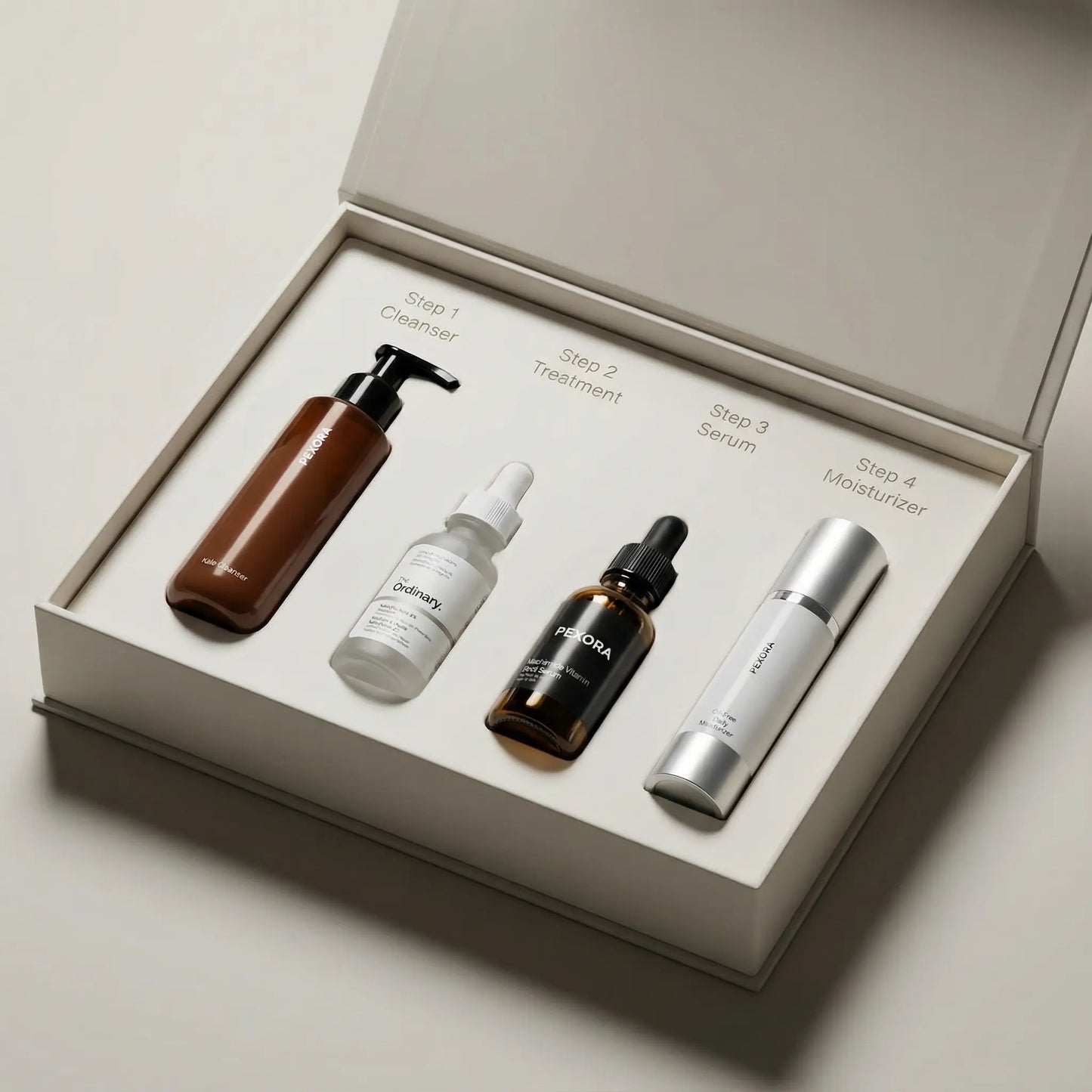
The PEXORA Acne Control Routine Set is designed for acne-prone skin living in heat, humidity, and constant AC.
Instead of chasing pimples, it focuses on:
- Preventing pore congestion
- Controlling oil without stripping
- Protecting the skin barrier
This reduces breakouts, dark marks, and long-term scarring.
View the Acne Control Routine SetQuick Answers
What makes skin acne-prone?
Excess oil, clogged pores, bacteria, inflammation, and a weakened skin barrier.
Can acne-prone skin be cured?
No — but it can be controlled with the right routine.
Is acne-prone skin always oily?
No. Many people with acne-prone skin are dehydrated or sensitive.
How do I stop acne-prone skin from breaking out?
Use a consistent, barrier-safe routine instead of harsh spot treatments.
Bottom Line
Acne-prone skin isn’t about fighting pimples.
It’s about creating an environment where pimples stop forming.
Control the barrier.
Balance oil.
Acne follows.